Author: admin


Teaching Beyond the Textbook
Teaching Beyond the Textbook
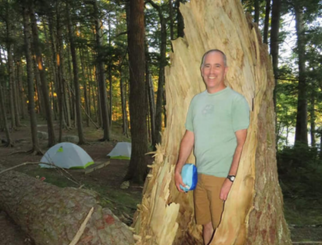
Daniel Oster is a senior biology teacher with the Toronto District School Board, but his role extends far beyond the science lab. He’s also a swim coach, glassblower, cycling commuter, crossfitter, and father of two daughters. Since 2005, he’s been an Award Leader with Award Canada, using the program to support Youth At Risk and redefine what learning and growth can look like for students.
In recognition of his long-standing commitment to youth development and community engagement, Daniel was awarded the King’s Coronation Medal, a national honour celebrating Canadians who have made significant contributions to their communities and to Canada as a whole.
“I started at an alternative school, West End Alternative, where many of the students had been displaced or kicked out of their home schools,” Daniel says. “We used the Award as a leadership course. The students worked through all the pillars; goal setting, service, physical activity, skill development, and the Adventurous Journey as part of the curriculum.”
A Tool for Engagement and Reflection
From the very beginning, Daniel saw the Award as more than just an extracurricular; it was a structure that challenged and nourished students at the same time.
“We used reflection and goal-setting as a kind of scaffold,” he explains. “It helped me meet my goals as a new teacher, to get kids out of the city, to see things differently, to push themselves. A lot of them hadn’t even left the 416 in Toronto. So getting that new perspective really mattered.”
Making Space for Everyone
Daniel’s classrooms have always been diverse, and he’s intentional about making the Award meaningful for every student.
“Inclusivity is baked into how I run the Award. I’ve always been at schools with students from all kinds of backgrounds,” he says. “Indigenous feminism is at the heart of my teaching. I question the narratives we’re told to pass on, and try to replace them with ones that reflect the kids I work with.”
He works to make the Award something every student can connect to. “That means questioning whose names we’re glorifying in the curriculum, and finding ones that are relevant. It also means making sure students can see themselves in the Award.”
When Small Moments Become Big Shifts
The impact of the Award isn’t always immediate, but Daniel has seen what it can do over time.
“There was one person at West End who went through the program. He came on all the field trips. Now he’s a teacher in Thailand. I like to think the Award played a part.”
Another moment that’s stuck with him came during a canoe trip to the Toronto Islands. “We were doing an urban overnight. You could literally see the CN Tower. But for one student, it was still completely outside her comfort zone. She was overwhelmed, but in the end, she stayed and came back to the group. I hope the fact that she was still accepted, even though she was scared, helped her grow.”
Mentorship at the Core
Daniel’s own journey with the Award was shaped by mentors who helped him translate his outdoor education background into an Award program that worked for his students.
“The Award is all about mentorship,” he says. “Watching how others used the Award to engage youth showed me how to give students something to be proud of.”
He’s carried that approach forward, mentoring both students and their assessors. “I send out emails now with pointers on how to guide students through SMART goals. It’s that kind of gentle, supportive mentorship I try to model.”
Breaking Down Barriers
“We find ways to run the program affordably. I’m certified to lead trips myself, so we don’t need third parties. We’ve done Bronze trips for $20, just hiking through the Rouge Valley.”
Daniel continued. “Some students are busy. They don’t want to do extra reporting and reflecting. But if we make it part of their writing portfolio or connect it to something they already care about, it becomes more meaningful.”
Parenting, Reversed
When asked if being a father influenced how he guides students through the Award, Daniel offers a surprising take.
“It’s actually the other way around,” he says. “I’d never even heard of SMART goals before getting involved with the Award. Now I use that same framework with my daughters, Zoe and Kaia, helping them take big ideas and break them into small, realistic steps.”
His work with the Award hasn’t just shaped his teaching, it’s shaped his parenting. “We all get a little lofty sometimes, and when we fall short a few times in a row, it can be hard to try again. I want them to feel like they can always start with a small step toward something bigger.”
Why He’s Still Here
After nearly two decades, Daniel’s still leading the program at Sir Wilfrid Laurier Collegiate Institute in Scarborough. For Daniel, the Award is about the spark that happens when a student finally believes they can do something hard.
And that’s more than worth it.
Kathleen Shea’s Ongoing Legacy of Giving Back

Launching an Eyeglasses Organization

Alternate Curriculum in Newfoundland
How the Award Transformed Peter Himmelman’s School

From Aspiring Lawyer to Passionate Educator: Matteo Amaral’s Award Journey
“In my first business course, my team ran a small company that made $500. Later, in another course, we applied the leadership and strategy skills I developed through volunteering through the Award, and our business generated $3,000 in revenue. That’s the difference experience makes.”
A Career Plan That Took an Unexpected Turn
For Matteo Amaral, the Award was more than just a program- it was a turning point in his life. When he first started the Award at De La Salle College, he had a clear career plan: become a lawyer. But through his experiences in DECA (Distributive Education Clubs of America) and his leadership in the finance cluster, he uncovered a passion he hadn’t expected.
Discovering a Passion for Business
His journey took a pivotal turn when he joined DECA, a competitive business club, while working towards his Award. Seeking a leadership-oriented volunteer role, Matteo took on a position in the finance cluster, helping fellow students understand complex topics in accounting and economics. At first, he still believed law was his calling, but everything changed when he saw his students engage with the material. “I realized I was making an impact. These formulas were tough, and most people didn’t want to learn them- but if I could teach them in a way that made sense, I could help expand their knowledge,” Matteo recalls. That realization sparked a passion for business that has shaped his ambitions ever since.
Developing Discipline and Time Management
The Award not only helped him discover his true calling but also instilled in him the discipline and time management skills to succeed. Balancing the Award’s weekly commitments- skill development, volunteering, and physical activity- taught him accountability. “Without the structure of the Award, it’s easy to push things off until next week. Then next week becomes the week after that, and suddenly, you’re behind on your goals,” he explains. This habit of staying on top of his commitments has served him well in his current role as an assistant teacher at Spirit of Math. “The Award kept me motivated and accountable. That’s what helped me show up consistently and manage my workload.”
Debating: Learning to Think on His Feet
Matteo’s debating experience through the Award also helped him sharpen his critical thinking. Initially, he believed that having the strongest arguments guaranteed victory. However, an opponent once challenged one of his key points so effectively that he had to rethink his strategy. “I realized debating isn’t just about proving your argument- it’s about being adaptable and understanding different perspectives. That mindset has made me a better problem solver in all areas of life.”
Exploring Finance and Entrepreneurship
Today, Matteo is passionate about finance and entrepreneurship, having explored topics like investment banking and business strategy. He’s even considering a finance-focused Gold Award project in New York. Looking back, he believes the biggest difference between who he was before the Award and who he is now comes down to experience. “In my first business course, my team ran a small company that made $500. Later, in another course, we applied the leadership and strategy skills I developed through DECA and the Award, and our business generated $3,000 in revenue. That’s the difference experience makes.”
Advice to Future Award Participants
For young people considering the Award, Matteo’s advice is simple: just start. “People think it’s a huge commitment, but the truth is, you’re probably already doing the activities, whether it’s a sport, volunteering, or a leadership role. The Award isn’t a hassle; it’s an opportunity to structure what you’re already passionate about.”
A Future Shaped by the Award
Matteo Amaral may have begun his journey thinking he would be a lawyer, but thanks to the Award, he discovered something even greater: a passion for business, leadership, and making an impact on others. His journey is proof that the Award doesn’t just build resumes- it builds futures.
How to stand out in a competitive job market
From Struggle to Strength: Kyle Payne’s Story
By Maya Victoria Rojas/em>
Feature photograph: Courtesy of Kyle Payne
Kyle Payne completed all three levels of the Award through his cadet unit in Lindsay, Ontario and since then, he continues to give back to the community through volunteering. A part-time reservist with the Canadian Armed Forces and a full-time municipal law enforcement in Peterborough, he also volunteers with St. John’s Ambulance as a medical first-aid responder and conducts simulation trainings with his colleagues.


